Search

Type your text, and hit enter to search:

Margaret Blaid and the Lost Medieval Chantry 

Some of the most fascinating stories in the history of St Andrew's Kildwick concern people whose names have almost disappeared from memory.

We know remarkably little about their lives. Their homes have vanished, their graves may be unmarked, and the buildings they knew have been altered beyond recognition.

Yet occasionally a surviving document gives us a glimpse into their world.

One such person was Margaret Blaid, a widow whose generosity helped support religious worship at St Andrew's more than 500 years ago.

Her foundation was known as a chantry, an arrangement through which a priest was supported to offer prayers and celebrate Mass for the souls of the departed.

Although the precise location of Margaret's chantry within the church remains a mystery, the surviving records tell us something remarkable about its purpose, its priest and its eventual fate.

They also reveal an unexpected connection between medieval worship at Kildwick and the education of children in Skipton.

A Woman Remembered After Five Centuries

Margaret Blaid lived during the closing years of medieval England, when the religious life of communities such as Kildwick was very different from what we know today.

The parish church stood at the centre of a world in which worship, prayer, remembrance and the lives of the departed were closely connected.

In medieval Christian belief, death did not sever the relationship between the living and those who had gone before them. Prayer for the departed was understood as an expression of continuing love and a participation in the communion of saints.

Those with sufficient resources sometimes established chantries, providing an income to support a priest who would offer prayers and Masses for their souls.

Margaret was one such benefactor.

We know from a government survey undertaken in 1546 that she was a widow and had established an endowed religious service at St Andrew's.

The survey refers to legal arrangements dated 12 March 1505, involving Henry Clifford and the carrying out of Margaret's last will.

That date provides an important historical clue, although it does not necessarily tell us when Margaret died or precisely when the chantry first began.

What we can say is that, by the early sixteenth century, arrangements associated with her wishes had been formally recorded.

More than five centuries later, her name survives because those arrangements were documented.

What Was a Chantry?

To understand Margaret's story, we need to imagine the religious life of a medieval parish church.

St Andrew's was not simply somewhere people gathered for Sunday worship. It was a place where prayers and services marked the hours, seasons and great events of life.

A chantry provided for additional prayers and celebrations of Mass, usually supported through income from land or property.

Sometimes a chantry possessed its own chapel or altar. In other cases, its priest used an existing part of the church.

This is an important distinction at Kildwick.

Although we know Margaret established an endowed service associated with Our Lady, the surviving documents do not tell us exactly where within St Andrew's it was celebrated.

The foundation was not necessarily responsible for constructing a new chapel. Its principal purpose was to provide for continuing worship and remembrance.

And, in Margaret's case, that worship was closely connected with the life of the wider parish.

The Priest Who Served Margaret's Foundation

The 1546 certificate names the priest responsible for the chantry as Stephen Elys.

His duties were quite specific.

He was expected to pray for Margaret Blaid and for all Christian souls. He was also required to assist with divine service in the choir and help the parish curate when needed.

In addition, the foundation provided for Masses of Our Lady on Saturdays and Sundays, when suitable assistance was available.

This tells us something important.

Margaret's generosity did not merely provide for private prayers in her memory. It also supported the regular worshipping life of St Andrew's.

Stephen Elys was expected to contribute to the services of the parish church, assisting its clergy and participating in the prayers of the community.

We can imagine him taking his place among those leading worship in the great medieval church, offering prayers for Margaret and others who had died, while helping to sustain the religious life of the people of Kildwick.

The records cannot tell us exactly what his daily routine looked like. Nevertheless, they provide a rare glimpse into the work of a priest serving a Yorkshire parish immediately before the Reformation transformed English religious life.

How Was the Chantry Funded?

Margaret's foundation was not simply a promise that someone would remember her in prayer.

It was supported by a carefully organised financial arrangement.

The 1546 survey records income from ten property interests, including houses and land, producing an annual rental of £3 14s 8d.

A separate payment of 12 shillings a year was also recorded in connection with assistance to the curate and choir services.

These sums may appear modest today, but they represented a continuing source of income intended to sustain the religious duties of the foundation.

The records even preserve the names of tenants and details of the property from which the rents were collected.

This gives us another fascinating connection with the medieval parish.

The prayers offered inside St Andrew's were supported by the economic life of the community beyond its walls.

Land, homes, tenants and rents all contributed towards maintaining worship.

Margaret's foundation therefore connected the everyday working life of the parish with the spiritual life of its church.

Where Was Margaret's Chantry?

This is perhaps the most intriguing question of all.

Visitors to St Andrew's will know that the eastern parts of the church contain several spaces which have been associated with chapels, altars and individual families.

In our earlier article, The Chapel with Many Names, we explored the complicated history of the northern chapel, known at different times as the Scarborough Chapel, Currer Chapel, Morning Chapel and Lady Chapel.

Could this have been the location of Margaret Blaid's foundation?

It is an attractive possibility, especially because her chantry was associated with Our Lady.

But the evidence does not yet allow us to make that identification with confidence.

The 1546 certificate tells us that the chantry service took place within the parish church. It refers to duties in the choir and Masses of Our Lady, but does not identify a particular chapel, altar or position within the building.

Later historical accounts describe the northern chapel as a chantry chapel associated with the Scarborough family. That is a separate strand of evidence, and we cannot simply assume that it refers to Margaret's foundation.

It is entirely possible that her priest used an existing altar rather than a chapel constructed specifically for the chantry.

For now, the exact location remains one of the unanswered questions in Kildwick's medieval history.

The chantry is documented. Its precise place within the church is not.

The Reformation Changes Everything

Margaret could hardly have imagined how dramatically the religious world she knew would change.

During the sixteenth century, England experienced a series of profound religious upheavals.

In January 1540, Bolton Priory surrendered to the Crown, ending the longstanding relationship between its Augustinian canons and Kildwick.

Yet this did not immediately bring Margaret's chantry to an end.

Her foundation continued to be recorded in the chantry surveys undertaken later in Henry VIII's reign.

The decisive changes came under Edward VI, when legislation in 1547 provided for the suppression of chantries and the transfer of their endowments to the Crown.

A further survey in 1548 recorded the financial arrangements associated with Margaret's foundation.

The religious purpose for which she had provided was passing into history.

But an unexpected part of the story was still unfolding.

From Medieval Prayers to the Schoolroom

One of the most surprising discoveries in the records concerns Stephen Elys himself.

By the time of the 1548 survey, he was identified as the schoolmaster of the free school at Skipton.

The associated records describe him as forty-three years old and state that he had been teaching there for five years.

They also record a connection between his maintenance as schoolmaster and income associated with the Kildwick chantry.

The Skipton return refers to 120 scholars.

Here is an extraordinary glimpse into the changes taking place during the Reformation.

A man associated with an endowed religious foundation at Kildwick was also involved in educating children at Skipton.

We must be careful not to claim more than the documents establish. They do not tell us that Margaret established a school at Kildwick, nor that Stephen taught children inside St Andrew's.

The school identified in the records was at Skipton, and the precise financial arrangements require further investigation.

Nevertheless, the connection is fascinating.

It shows how the world of medieval religious endowments overlapped with the developing provision of education.

Even as the chantry system was being dismantled, the surviving records reveal a priest whose work extended beyond the altar and into the schoolroom.

What Remains of Margaret's Legacy?

More than five hundred years have passed since the legal arrangements associated with Margaret Blaid's foundation were recorded.

The religious services she endowed have long since ceased. We cannot identify with certainty the precise altar at which her Masses were celebrated.

We know little of her family, her home or the circumstances of her life.

Yet something of her intention has survived.

Margaret wanted prayer and remembrance to continue beyond her lifetime.

She provided resources so that a priest could pray not only for her but for others, and could contribute to the worship of the parish community.

Through an extraordinary accident of historical preservation, her name remains in documents produced by the very authorities whose religious changes brought the chantry system to an end.

Today, visitors to St Andrew's may never have heard of Margaret Blaid.

There is no securely identified surviving chapel which we can point to and say was hers.

But her story reminds us that the history of the Lang Kirk of Craven is not simply the history of its buildings, its clergy or its wealthy landowning families.

It is also the history of individuals whose generosity, faith and hope helped sustain the life of the church.

Margaret Blaid was one of them.

And although the place where her chantry priest offered prayers may now be lost to us, her name has not been forgotten.

24/11/2026
HelloWhite
Hello and welcome to our church. If you are a new visitor, we have a page for you to get to know us and learn more about planning a visit.
Click here to see more.

Planning your Visit

A Warm Welcome 

If you're new to church, new to the area, returning after some time away, or simply wondering whether church might be for you, you are very welcome at Kildwick, Cononley & Bradley.

You don't need to know what to do, what to say or even what you believe. Just come as you are. Our churches are places where people can worship, ask questions, find friendship and explore faith together.

We are one parish with three churches: St Andrew's Kildwick, St John's Cononley and The Bradley Church. Each is a little different, but wherever you join us, we hope you will find a warm welcome.

Find our Sunday services

What are we about?

At the heart of our life together is Jesus Christ and his call to love God and love our neighbour.

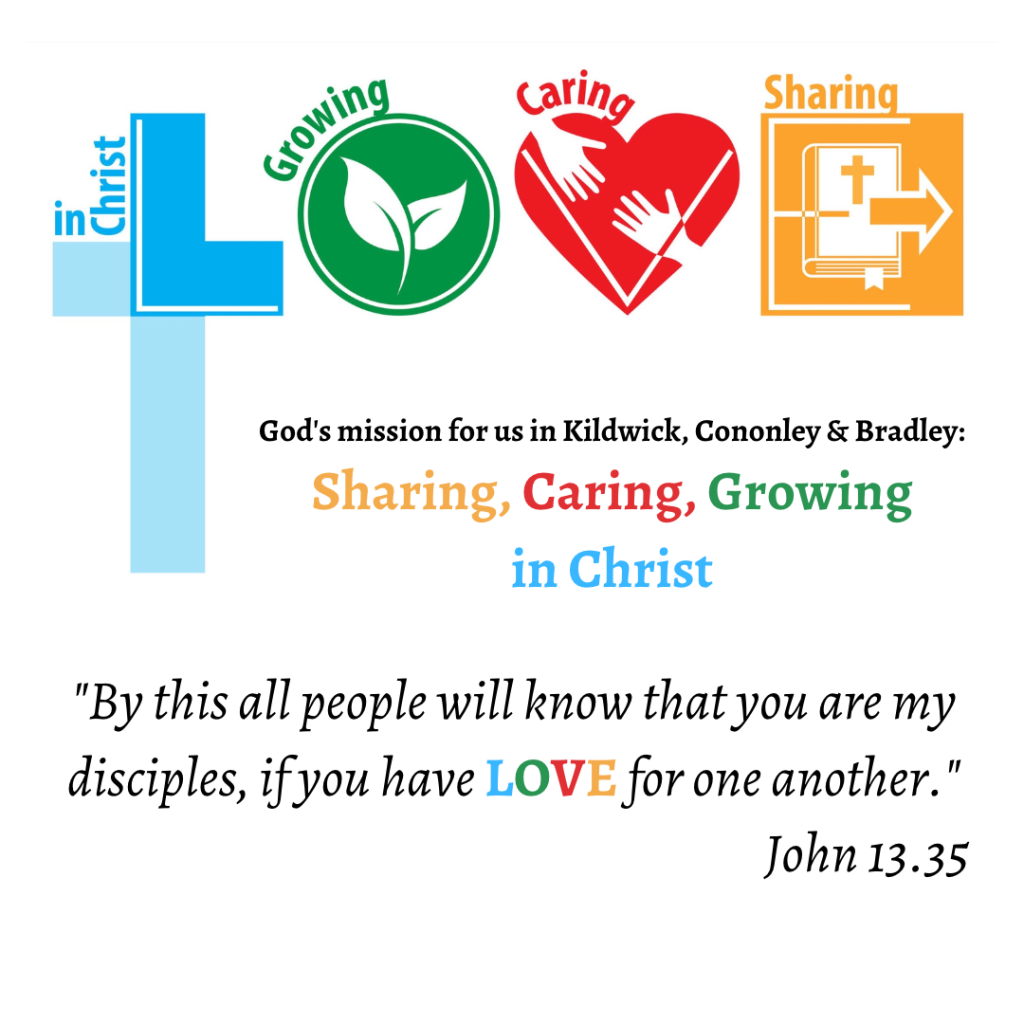
For many years we have expressed our mission in four simple words:

Sharing, Caring, Growing in Christ


In Christ

Everything begins with God's love for us in Jesus Christ. We don't come to church because we have everything sorted out. We come to worship, to pray, to learn and to discover more of what it means to follow Jesus.

Growing

Faith is a journey. None of us has all the answers, and there is always more to discover. Through worship, prayer, the Bible and one another, we seek to grow in faith and in our understanding of God.

Caring

Following Jesus means caring for one another and for the communities around us. We seek to put God's love into practice through friendship, compassion, service and care for our neighbours.

Sharing

The good news of Jesus is something to be shared. We want to share God's hope, love and peace through what we say, but also through how we live and how we serve others.
1373761
This is reflected in our vision for the parish:

Living out our faith, rooted in service; embracing everybody equally.


We want these to be more than words. They describe the kind of Christian community we are seeking to become.

What happens if I come on Sunday?

You don't need to book or let us know that you're coming. Just turn up.

Our services vary across our three churches. Some are traditional celebrations of Holy Communion, while others are more informal. You can find the time and location of this week's services on our Sunday Services page.

When you arrive, there will usually be someone to welcome you and give you anything you need for the service. You are welcome to sit wherever you like.

Don't worry if you aren't familiar with the service or don't know when to stand or sit. Just follow along as much or as little as you feel comfortable with. Nobody will mind if you get something 'wrong'.

See our Sunday services

Do I need to be a Christian?

No.

You might have been a Christian for many years, be returning to church after a long time away, have lots of questions, or simply be curious.

You don't have to have faith sorted out before coming to church. Exploring, questioning and sometimes doubting are all part of the journey.

Whatever your background, faith or spiritual beliefs, you are welcome.

What should I wear?

Whatever you normally wear!

There is no dress code. Some people dress smartly, others come in jeans and trainers. Come in whatever makes you comfortable.

What about children?

Children and families are very welcome at our churches.

We know that children make noise, move around and don't always behave like adults, and that's absolutely fine. Please don't worry about having to keep them perfectly quiet.

We also have activities especially for children and families throughout the year.

Find out about Children & Families

Will I be expected to give money?

No.

There may be an opportunity to give during or after a service, but visitors should never feel under any pressure to contribute. Please simply be our guest.

Can I receive Communion?

If you normally receive Holy Communion in your own church, you are welcome to receive with us.

If you would prefer not to receive Communion, you are still very welcome to come forward for a blessing, or simply remain in your seat. There is no pressure either way.

Accessibility

Accessibility varies between our three historic church buildings. You can find specific access information on each church's page, or please contact us if we can help you plan your visit.

Getting involved

Coming to a Sunday service is only one way to be part of our parish.

Throughout the week there are opportunities to meet people, pray, learn, sing, serve our communities and simply spend time together. Have a look at our What's On pages to see what might interest you.

You can also sign up for our weekly email newsletter to find out what's happening across Kildwick, Cononley & Bradley.

See What's On
Get our Weekly Newsletter

Still have questions?

Please get in touch. It doesn't matter whether your question is about a service, accessibility, children, faith, or simply which of our churches might be right for you.

We would be very happy to help.

Contact Us

A word from Mike
Mike-solo-300x222

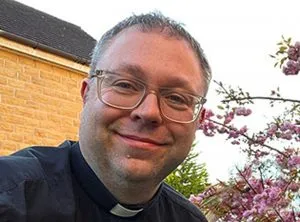
I'm Mike Green, the Vicar of Kildwick, Cononley & Bradley.

Finding your way into a church for the first time can sometimes feel daunting, particularly if you're not sure what to expect. I hope you'll discover that you don't need to know the right words, understand everything we do, or have all the answers before you come.

Whoever you are, and wherever you are on your journey of faith, there is a place for you here.

I hope we'll have the opportunity to welcome you in person soon.

Best wishes,

Revd Mike