Search

Type your text, and hit enter to search:

Remembrance Sunday Sermon 

Below is Rev'd Mike's sermon from Remembrance Sunday 2026, preached at St Andrew's Kildwick at 10am.

Every name on a war memorial represents a life that was meant to be longer.

A life that might have included marriage, children, grandchildren. Birthdays and Christmases. Ordinary days at work, evenings with friends, walks in familiar places. All those small, unremarkable moments that, when we look back, turn out to have been the substance of a life.

But for those whose names we remember today, those moments never came.

And perhaps that is one of the hardest things about Remembrance Sunday. We are not simply remembering people who died. We are remembering lives that were interrupted. Futures that never happened.

Behind every name was someone who was loved. Someone whose absence left an empty chair at a table. Someone whose family learned to live with a grief that never entirely went away.

And behind those who returned home were often other stories. Stories of wounds that healed, and wounds that didn't. Of memories too painful to speak about. Of people who came home from war but could never quite leave it behind.

Today, we remember them all.

But I wonder whether remembrance asks something more of us than simply remembering.

Because there is a danger that, over time, remembrance becomes something we do rather than something that changes us.

We gather. We wear our poppies. We stand in silence. We hear the familiar words. And then we return to our lives.

These traditions matter enormously. But surely remembrance must ask something more of us than two minutes of our time.

Those who went to war did so for many reasons. Some believed passionately in the cause. Some went out of duty, some out of loyalty to their friends, and some simply because they were told to go.

We must be careful not to pretend that every death was noble, every cause just, or every sacrifice willingly made.

War is far too terrible, and human lives far too precious, for such easy answers.

Yet whatever brought them there, their lives mattered. Their suffering mattered. And the grief of those who loved them mattered.

It still does.

And perhaps the greatest honour we can pay them is to take seriously the world we are leaving to those who come after us.

We sometimes speak of peace as though it were simply the absence of war. As though peace arrives when the guns fall silent.

But the guns fell silent in November 1918. And barely twenty years later, the world was at war again.

Because peace is not simply the ending of fighting. It must be built, patiently and deliberately, through justice, understanding, forgiveness and the recognition of our shared humanity.

And we know how fragile it is.

In Ukraine, in Sudan, in the Holy Land, and in so many other places, families are living through the very horrors we gather today to remember.

Cities destroyed. Children killed. Parents burying their sons and daughters. People driven from their homes, uncertain whether they will ever return.

And alongside these wars, we see something else that should deeply trouble us.

The language of hatred is becoming increasingly familiar.

Across our own country and elsewhere, we hear voices encouraging us to fear those who are different. To blame outsiders for our problems. To see people of another race, religion or nationality as somehow less deserving of dignity, compassion or belonging.

We see far-right movements gaining attention and support, and even the language of Christianity being used to justify nationalism, exclusion and hostility towards others.

And we should be clear about this.

There is nothing wrong with loving our country. Nothing wrong with being grateful for its freedoms, or remembering those who defended them.

But love of country becomes something dangerous when it requires us to hate another.

And Christianity becomes profoundly distorted when the name of Jesus is used to divide humanity into those who belong and those who do not.

In our Gospel, Jesus speaks of the greatest love: laying down one's life for one's friends. Words with particular resonance today.

But he also commands us to love one another.

Not merely those who look like us, believe like us, or come from the same country as us.
One another.

And that raises an uncomfortable question.

What is the point of remembering the terrible consequences of hatred in the past if we are unwilling to challenge hatred in the present?

What does it mean to honour those who died resisting tyranny if we remain silent when others are dehumanised today?

Because the hatred that leads to war rarely begins with weapons.

It begins with words. With suspicion. With the suggestion that some lives matter less than others.

And that is something every generation, including our own, has a responsibility to resist.

In a few moments, we shall stand in silence.

And silence is perhaps the most honest response we can make.

Because there are no words adequate to the suffering of war. No speech that can restore the years that were stolen, or bring home those who never returned.

But our silence must not become an excuse for remaining silent when it matters.

Within those two minutes there can be gratitude, sorrow, repentance, and perhaps most importantly, a quiet determination.

A determination that we will not grow indifferent to suffering.

That we will not allow hatred to become ordinary.

That we will remember that those we call enemies are also human beings, with families, hopes and dreams of their own.

And that, in whatever small ways we can, we will be people who make peace rather than merely wish for it.

We cannot give back the lives that were lost.

But we can decide what kind of world we will help to build with the lives that have been given to us.

Perhaps that is what we owe the dead.

Not simply that we remember how they died, but that we think carefully about how we live.

Amen.
 

08/11/2026
HelloWhite
Hello and welcome to our church. If you are a new visitor, we have a page for you to get to know us and learn more about planning a visit.
Click here to see more.

Planning your Visit

A Warm Welcome 

If you're new to church, new to the area, returning after some time away, or simply wondering whether church might be for you, you are very welcome at Kildwick, Cononley & Bradley.

You don't need to know what to do, what to say or even what you believe. Just come as you are. Our churches are places where people can worship, ask questions, find friendship and explore faith together.

We are one parish with three churches: St Andrew's Kildwick, St John's Cononley and The Bradley Church. Each is a little different, but wherever you join us, we hope you will find a warm welcome.

Find our Sunday services

What are we about?

At the heart of our life together is Jesus Christ and his call to love God and love our neighbour.

For many years we have expressed our mission in four simple words:

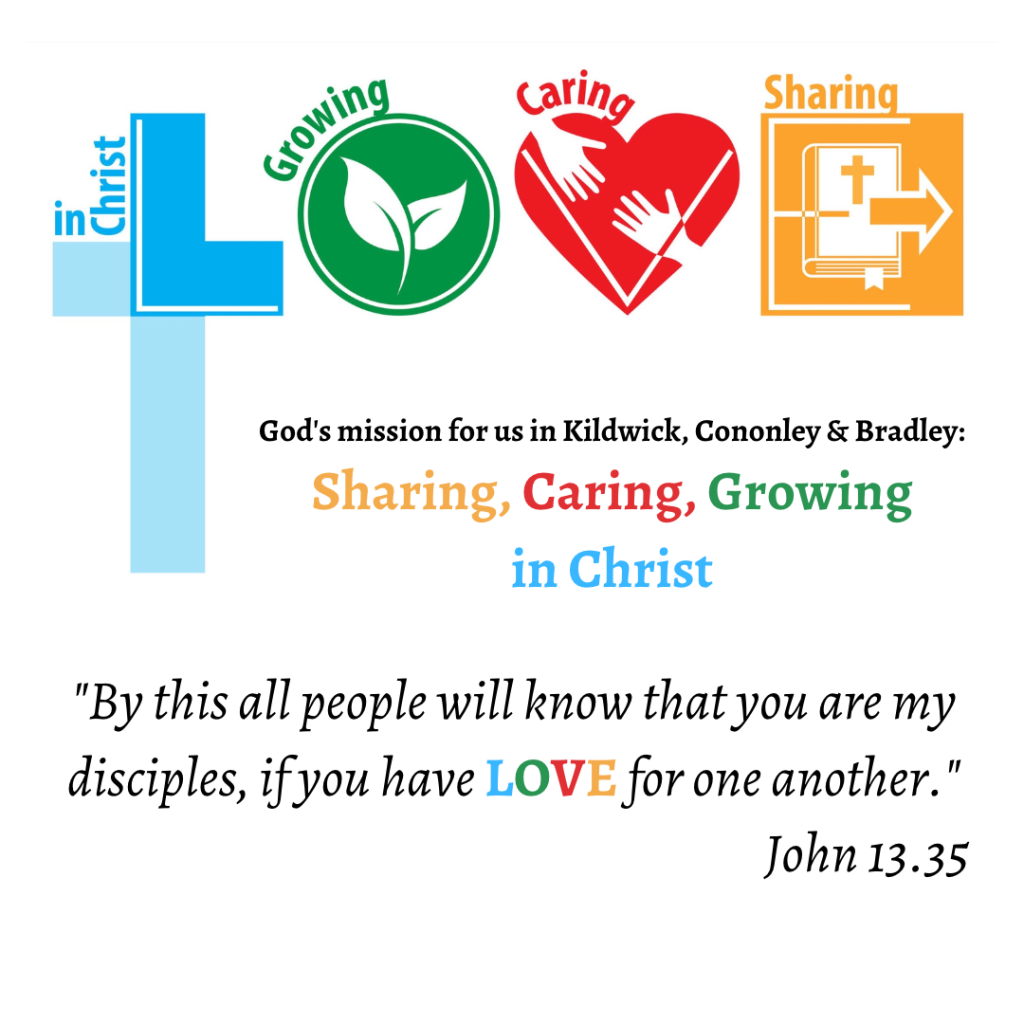
Sharing, Caring, Growing in Christ


In Christ

Everything begins with God's love for us in Jesus Christ. We don't come to church because we have everything sorted out. We come to worship, to pray, to learn and to discover more of what it means to follow Jesus.

Growing

Faith is a journey. None of us has all the answers, and there is always more to discover. Through worship, prayer, the Bible and one another, we seek to grow in faith and in our understanding of God.

Caring

Following Jesus means caring for one another and for the communities around us. We seek to put God's love into practice through friendship, compassion, service and care for our neighbours.

Sharing

The good news of Jesus is something to be shared. We want to share God's hope, love and peace through what we say, but also through how we live and how we serve others.
1373761
This is reflected in our vision for the parish:

Living out our faith, rooted in service; embracing everybody equally.


We want these to be more than words. They describe the kind of Christian community we are seeking to become.

What happens if I come on Sunday?

You don't need to book or let us know that you're coming. Just turn up.

Our services vary across our three churches. Some are traditional celebrations of Holy Communion, while others are more informal. You can find the time and location of this week's services on our Sunday Services page.

When you arrive, there will usually be someone to welcome you and give you anything you need for the service. You are welcome to sit wherever you like.

Don't worry if you aren't familiar with the service or don't know when to stand or sit. Just follow along as much or as little as you feel comfortable with. Nobody will mind if you get something 'wrong'.

See our Sunday services

Do I need to be a Christian?

No.

You might have been a Christian for many years, be returning to church after a long time away, have lots of questions, or simply be curious.

You don't have to have faith sorted out before coming to church. Exploring, questioning and sometimes doubting are all part of the journey.

Whatever your background, faith or spiritual beliefs, you are welcome.

What should I wear?

Whatever you normally wear!

There is no dress code. Some people dress smartly, others come in jeans and trainers. Come in whatever makes you comfortable.

What about children?

Children and families are very welcome at our churches.

We know that children make noise, move around and don't always behave like adults, and that's absolutely fine. Please don't worry about having to keep them perfectly quiet.

We also have activities especially for children and families throughout the year.

Find out about Children & Families

Will I be expected to give money?

No.

There may be an opportunity to give during or after a service, but visitors should never feel under any pressure to contribute. Please simply be our guest.

Can I receive Communion?

If you normally receive Holy Communion in your own church, you are welcome to receive with us.

If you would prefer not to receive Communion, you are still very welcome to come forward for a blessing, or simply remain in your seat. There is no pressure either way.

Accessibility

Accessibility varies between our three historic church buildings. You can find specific access information on each church's page, or please contact us if we can help you plan your visit.

Getting involved

Coming to a Sunday service is only one way to be part of our parish.

Throughout the week there are opportunities to meet people, pray, learn, sing, serve our communities and simply spend time together. Have a look at our What's On pages to see what might interest you.

You can also sign up for our weekly email newsletter to find out what's happening across Kildwick, Cononley & Bradley.

See What's On
Get our Weekly Newsletter

Still have questions?

Please get in touch. It doesn't matter whether your question is about a service, accessibility, children, faith, or simply which of our churches might be right for you.

We would be very happy to help.

Contact Us

A word from Mike
Mike-solo-300x222

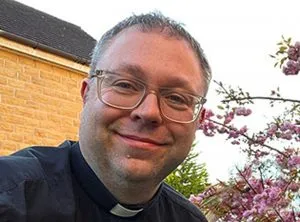
I'm Mike Green, the Vicar of Kildwick, Cononley & Bradley.

Finding your way into a church for the first time can sometimes feel daunting, particularly if you're not sure what to expect. I hope you'll discover that you don't need to know the right words, understand everything we do, or have all the answers before you come.

Whoever you are, and wherever you are on your journey of faith, there is a place for you here.

I hope we'll have the opportunity to welcome you in person soon.

Best wishes,

Revd Mike