Search

Type your text, and hit enter to search:

The Chapel with Many Names

Screenshot 2026-11-03 153017

The changing story of St Andrew’s Lady Chapel

At the eastern end of the north aisle of St Andrew’s lies a space with an unusually rich history.

Today, we know it as the Lady Chapel.

Earlier generations knew it as the Currer Chapel, the Scarborough Chapel and the Morning Chapel. An old label displayed with two keys preserves another intriguing name: the “Burial Choir”.

These names open a window onto centuries of parish life.

They recall local families, prayers for the departed, changing patterns of worship and a major restoration that transformed the appearance and purpose of this part of the church.

But they need to be read carefully. Some describe family associations, others describe a use, and the boundaries of the space itself have changed.

Together, they help us recover the story of a chapel that has repeatedly found a new place in the life of St Andrew’s.

The Scarborough Chapel

One of the chapel’s earlier recorded associations is with the Scarborough family of Glusburn.

Historical descriptions preserve the memory of a sixteenth-century window showing William Scarborough and his wife Alice kneeling, with their children arranged behind them.

Its inscription asked for prayers for their souls and those of their children.

Such a window was both a family memorial and an expression of faith. It placed the family within the worship of the church, inviting succeeding generations to remember them before God.

The chapel’s name also survives in Brereton’s account of the church. He identifies the eastern end of the north aisle as the former Scarborough Chapel.

He describes another reminder of the family: a carved pew door, bearing Scarborough heraldry, which had been incorporated into a litany stool. Its reuse illustrates how older furnishings could acquire new purposes while retaining traces of their earlier associations. 

The story of the chapel would eventually become associated with another family whose name appears throughout Kildwick’s history.

From Scarborough to Currer

The historian Thomas Dunham Whitaker records that John Currer purchased the north chapel from Robert Parker of Cuerden, the owner of the Scarborough estate at Glusburn.

That transaction helps explain the change from Scarborough Chapel to Currer Chapel.

The Currers were closely connected with Kildwick Hall and the life of the parish. Their memorials preserve the names of successive generations and something of how those generations wished to be remembered.

Under their ownership, the north chapel became an imposing family memorial space.

Brereton describes it as having been vaulted over and enclosed by iron palisading. A large Currer monument blocked the eastern window.

The appearance was therefore quite different from the chapel familiar to visitors today.

Family commemoration occupied a substantial part of the church, with monuments, enclosure and burial closely connected.

The mystery of the “Burial Choir”

An old label displayed beside two keys offers another glimpse of this enclosed space.

It describes a key associated with a screen formerly separating the easternmost bay of the north aisle, using the name “Burial Choir”.

Those two words bring the funerary history of the area into focus.

They recall a part of the church set apart from its surroundings and associated with the remembrance of the dead.

The label is undated, however. We cannot yet establish when the name was used, who wrote the description or which surviving key belonged to the original lock.

It therefore gives us a valuable clue without supplying a complete chronology.

“Burial Choir” belongs among the names through which the space has been remembered. Its precise relationship to the successive Scarborough and Currer arrangements remains a subject for further investigation.

Was this once the Chapel of Our Lady?

There is another possibility behind the chapel’s history.

Sixteenth-century records document a Chantry of Our Lady within Kildwick parish church.

A chantry was an endowment supporting a priest to celebrate Masses and undertake specified religious duties. It might be associated with an altar within a larger church.

At Kildwick, the records connect the endowment with Margaret Blaid and name Stephen Elys as its priest. His duties included Masses and assistance in the choir.

This establishes an important part of the church’s medieval religious life.

It also raises an obvious question.

Could the service of Our Lady have been associated with the space now called the Lady Chapel?

It is possible, but the surviving records examined so far do not locate the chantry within a particular part of the building. They establish its presence in the parish church without identifying its altar.

The shared Marian association is interesting. A continuous history between the medieval chantry and the present Lady Chapel has yet to be demonstrated.

A different future for the chapel

By the beginning of the twentieth century, the eastern part of St Andrew’s required extensive restoration.

The work undertaken in 1901–03 involved major repairs and a reconsideration of how different parts of the church should be used.

The future of the Currer Chapel formed part of that process.

The original restoration petition proposed using it as a clergy vestry.

The scheme subsequently changed.

The faculty dated 2 September 1901 authorised its use as a Morning Chapel, giving this part of the church a renewed place in the parish’s worship.

The surviving paperwork preserves that change of intention. The arrangement eventually adopted emerged through revisions to the restoration scheme.

Opening the space again

Brereton’s account describes the transformation.

The vaulting and iron enclosure were removed, and the chapel was extended westwards to the screen.

The eastern window, long blocked by the Currer monument, was opened again. New mullions and cathedral glass were inserted.

Old oak seating was reused, while an altar formerly standing in the chancel was placed at the eastern end of the chapel.

The restoration therefore combined substantial change with the reuse of existing furnishings.

It also preserved a reminder of the chapel’s former extent.

Brereton records that a specially formed roof timber marked the original length of the Currer Chapel. Even as the space was enlarged, its earlier boundary was deliberately remembered.

He also notes that the old Farnhill Hall pew, bearing the date 1633 and the initials associated with Edmund Eltoft, was placed a little further west than before.

The renewed chapel brought together furnishings with histories of their own.

The Morning Chapel

“Morning Chapel” expressed the purpose of the restored space.

Within the unusual length of St Andrew’s, it provided a setting for the daily services of the parish.

Brereton described it as an “admirable place for the daily services”.

That observation marks an important moment in the story.

An area strongly associated with family burial and commemoration had been reshaped for regular worship. Its memorial history remained, while prayer and services gave it a renewed role in the wider life of the church.

The Lady Chapel

Today, the space is familiar as the Lady Chapel.

The name honours Mary, the mother of Jesus, and places the chapel within a long Christian tradition of Marian devotion.

Exactly when this became its usual name remains to be established.

Its earlier names nevertheless remain important.

Scarborough recalls an early family association. Currer remembers generations of local patronage and commemoration. Burial Choir preserves a clue to an enclosed funerary space. Morning Chapel records its renewal for daily worship.

Each name helps us understand something different about the same part of the church.

A place of prayer and remembrance

The history of the Lady Chapel is still being uncovered.

Documents, inscriptions, old descriptions and surviving furnishings each contribute something to the picture. Occasionally, even a label beside a pair of keys can preserve a detail that might otherwise have been forgotten.

When we enter the chapel today, we encounter the result of many generations of change.

Families have remembered their dead here. Worshippers have gathered for prayer. Older furnishings have been adapted, boundaries altered and new purposes found.

The chapel’s windows have their own stories to tell.

Before looking closely at them, it is worth remembering the changing space around them: a place where the history of local families and the worship of the parish have met across the centuries.

10/11/2026
HelloWhite
Hello and welcome to our church. If you are a new visitor, we have a page for you to get to know us and learn more about planning a visit.
Click here to see more.

Planning your Visit

A Warm Welcome 

If you're new to church, new to the area, returning after some time away, or simply wondering whether church might be for you, you are very welcome at Kildwick, Cononley & Bradley.

You don't need to know what to do, what to say or even what you believe. Just come as you are. Our churches are places where people can worship, ask questions, find friendship and explore faith together.

We are one parish with three churches: St Andrew's Kildwick, St John's Cononley and The Bradley Church. Each is a little different, but wherever you join us, we hope you will find a warm welcome.

Find our Sunday services

What are we about?

At the heart of our life together is Jesus Christ and his call to love God and love our neighbour.

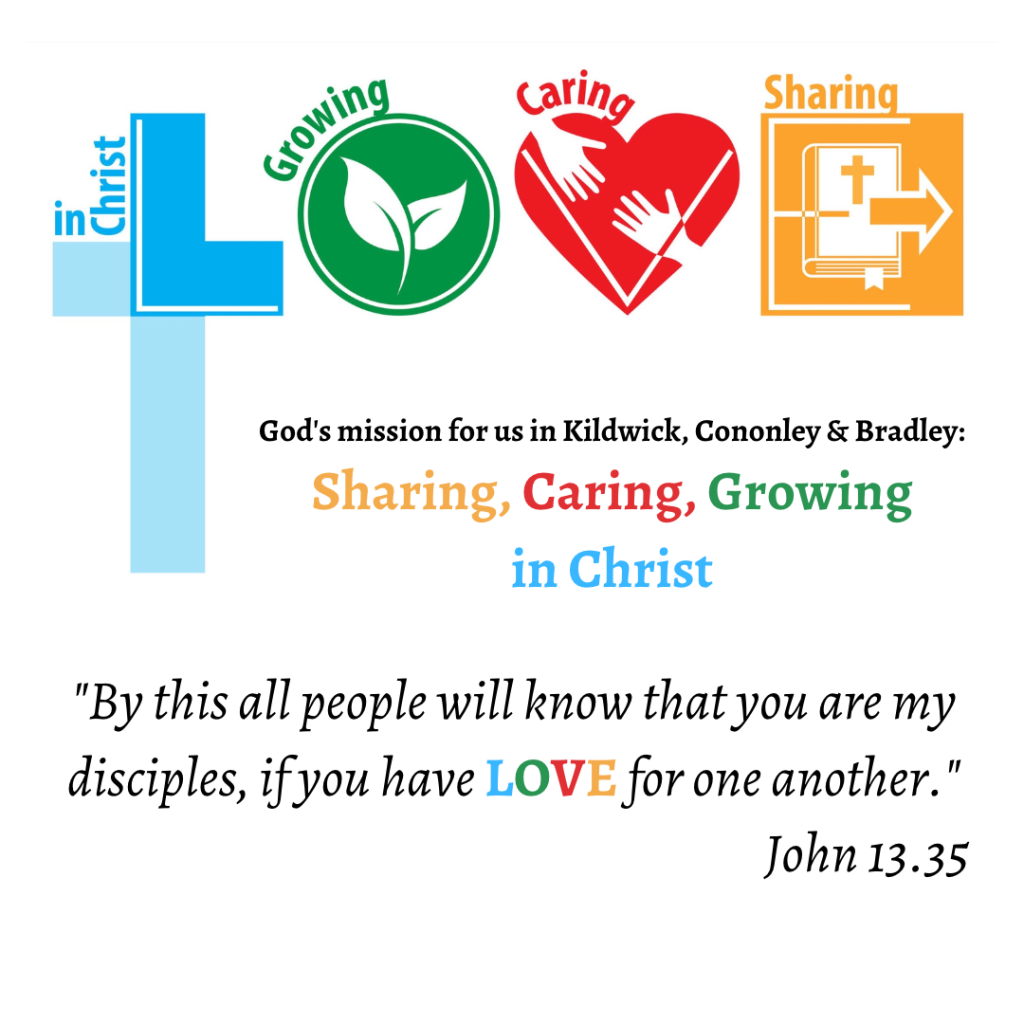
For many years we have expressed our mission in four simple words:

Sharing, Caring, Growing in Christ


In Christ

Everything begins with God's love for us in Jesus Christ. We don't come to church because we have everything sorted out. We come to worship, to pray, to learn and to discover more of what it means to follow Jesus.

Growing

Faith is a journey. None of us has all the answers, and there is always more to discover. Through worship, prayer, the Bible and one another, we seek to grow in faith and in our understanding of God.

Caring

Following Jesus means caring for one another and for the communities around us. We seek to put God's love into practice through friendship, compassion, service and care for our neighbours.

Sharing

The good news of Jesus is something to be shared. We want to share God's hope, love and peace through what we say, but also through how we live and how we serve others.
1373761
This is reflected in our vision for the parish:

Living out our faith, rooted in service; embracing everybody equally.


We want these to be more than words. They describe the kind of Christian community we are seeking to become.

What happens if I come on Sunday?

You don't need to book or let us know that you're coming. Just turn up.

Our services vary across our three churches. Some are traditional celebrations of Holy Communion, while others are more informal. You can find the time and location of this week's services on our Sunday Services page.

When you arrive, there will usually be someone to welcome you and give you anything you need for the service. You are welcome to sit wherever you like.

Don't worry if you aren't familiar with the service or don't know when to stand or sit. Just follow along as much or as little as you feel comfortable with. Nobody will mind if you get something 'wrong'.

See our Sunday services

Do I need to be a Christian?

No.

You might have been a Christian for many years, be returning to church after a long time away, have lots of questions, or simply be curious.

You don't have to have faith sorted out before coming to church. Exploring, questioning and sometimes doubting are all part of the journey.

Whatever your background, faith or spiritual beliefs, you are welcome.

What should I wear?

Whatever you normally wear!

There is no dress code. Some people dress smartly, others come in jeans and trainers. Come in whatever makes you comfortable.

What about children?

Children and families are very welcome at our churches.

We know that children make noise, move around and don't always behave like adults, and that's absolutely fine. Please don't worry about having to keep them perfectly quiet.

We also have activities especially for children and families throughout the year.

Find out about Children & Families

Will I be expected to give money?

No.

There may be an opportunity to give during or after a service, but visitors should never feel under any pressure to contribute. Please simply be our guest.

Can I receive Communion?

If you normally receive Holy Communion in your own church, you are welcome to receive with us.

If you would prefer not to receive Communion, you are still very welcome to come forward for a blessing, or simply remain in your seat. There is no pressure either way.

Accessibility

Accessibility varies between our three historic church buildings. You can find specific access information on each church's page, or please contact us if we can help you plan your visit.

Getting involved

Coming to a Sunday service is only one way to be part of our parish.

Throughout the week there are opportunities to meet people, pray, learn, sing, serve our communities and simply spend time together. Have a look at our What's On pages to see what might interest you.

You can also sign up for our weekly email newsletter to find out what's happening across Kildwick, Cononley & Bradley.

See What's On
Get our Weekly Newsletter

Still have questions?

Please get in touch. It doesn't matter whether your question is about a service, accessibility, children, faith, or simply which of our churches might be right for you.

We would be very happy to help.

Contact Us

A word from Mike
Mike-solo-300x222

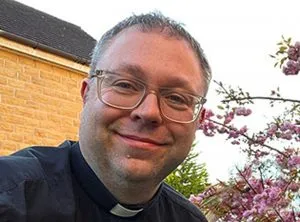
I'm Mike Green, the Vicar of Kildwick, Cononley & Bradley.

Finding your way into a church for the first time can sometimes feel daunting, particularly if you're not sure what to expect. I hope you'll discover that you don't need to know the right words, understand everything we do, or have all the answers before you come.

Whoever you are, and wherever you are on your journey of faith, there is a place for you here.

I hope we'll have the opportunity to welcome you in person soon.

Best wishes,

Revd Mike