Search

Type your text, and hit enter to search:

Who is the Stiveton Knight? 

One of the most striking medieval monuments in St Andrew’s is the stone figure of an armoured knight lying in the north aisle.

For generations he has been identified as Sir Robert de Stiveton, a member of the family who took their name from nearby Steeton. In medieval documents Steeton appears as Stiveton, so de Stiveton simply means ‘of Steeton’.

But which Robert de Stiveton is lying in Kildwick church?

The answer is surprisingly uncertain.

A knight from Steeton

The de Stiveton family were important local landholders with an obvious connection to Kildwick. Steeton itself lay within the medieval parish of St Andrew’s, and by the early thirteenth century its chapel was explicitly described as being within the parish of its ‘mother church’ at Kildwick.

It is therefore entirely believable that an important member of the family might have been commemorated here.

The shield carried by the effigy has traditionally been identified with the de Stiveton family, although even that identification needs some caution because it depends upon later antiquarian interpretation.

The real puzzle, however, is the identity of the knight and the date of his armour.

Did Sir Robert really die in 1307?

The traditional story identifies the knight as Sir Robert de Stiveton, who died in 1307.

That date appears in older histories of Kildwick and is connected with an entry in the accounts of Bolton Priory recording expenditure for the burial of a Robert de Stiveton.

There is, however, a problem.

The registers of the Archbishop of York contain a record concerning Sir Robert de Stiveton, knight, dated 7 November 1313. The modern catalogue identifies him as having died by around 1322.

If this is the same Robert who has traditionally been associated with the Kildwick monument, he clearly cannot have died in 1307.

It is possible that the old histories have confused different members of the family. With several generations using the same names, medieval family history can become surprisingly complicated.

And the monument itself adds another problem.

The armour dates from around 1345

When the antiquary William I’Anson studied Yorkshire’s medieval military effigies in the early twentieth century, he dated the Kildwick monument to around 1345.

The armour represented by the sculptor fits the middle decades of the fourteenth century much better than the beginning of it.

At first sight, that might suggest that the traditional identification is simply wrong.

But it doesn’t necessarily do so.

An old knight in new armour?

A medieval effigy did not necessarily have to be made immediately after somebody died.

A monument could be commissioned later by children or grandchildren wishing to commemorate an ancestor. If that happened at Kildwick, the sculptor could have represented an earlier Robert using the armour and artistic conventions familiar when the monument was actually made.

So it remains possible that the figure represents an earlier Sir Robert de Stiveton, commemorated some years after his death.

There is, however, another intriguing possibility.

Or is this another Robert?

The de Stiveton family contained more than one Robert.

A later Robert de Stiveton, living much closer to the period suggested by the armour, has also been proposed as the man represented by the monument.

The present church guide identifies him as a grandson of the earlier Robert, also called Robert, who died in 1353. If that identification is correct, an effigy dating from around 1345 would fit his lifetime remarkably well.

Local tradition has also suggested that this later Robert may have been involved in the medieval enlargement of St Andrew’s.

That would make a wonderful connection: a local landowner associated with the rebuilding of the great medieval church at Kildwick and subsequently commemorated within it.

At present, however, we have not found documentary evidence strong enough to establish either the identification or his involvement in rebuilding the church as fact.

So there are at least two possibilities.

The monument may commemorate an earlier Robert, represented in the armour fashionable when his descendants commissioned the effigy.

Or it may represent the later Robert de Stiveton, whose lifetime fits the date of the sculpture much more closely.

For now, we simply don’t know.

A high-status monument

What we can say is that this is an impressive piece of medieval sculpture.

Its quality suggests that whoever commissioned it possessed considerable wealth and status. This wasn’t simply a marker placed over an anonymous grave. Someone wanted this knight to be remembered prominently within the parish church.

And that tells us something about medieval Kildwick.

St Andrew’s wasn’t simply a place where the surrounding population came for worship. It was also where important local families expressed their identity, status and connection with the community, sometimes leaving monuments intended to survive for generations.

This one certainly has.

Not a Knight Templar

One particularly persistent story describes the figure as a Knight Templar, sometimes because his legs are crossed.

There is no evidence for that identification.

Crossed legs on medieval effigies do not demonstrate that the person was a Templar, or even that he had been on Crusade. That is a much later interpretation of medieval monuments.

Indeed, if the Kildwick effigy really was made around 1345, the Knights Templar had already been suppressed more than thirty years earlier.

Whatever adventures our knight may have experienced, there is presently no evidence that he was a Templar.

Moved in the nineteenth century

The knight hasn’t always occupied his present position either.

The Yorkshire antiquary Roger Dodsworth recorded the monument at Kildwick as early as 1621. Later accounts place the effigy in the floor beneath the fourth arch of the north aisle from the west.

It was moved in 1854 and placed upon the tomb chest on which it now lies.

So even his present ‘tomb’ doesn’t necessarily mark his medieval burial place.

A mystery in stone

It is tempting to give medieval monuments neat labels.

Sir Robert de Stiveton. Died 1307. Crusader. Knight Templar.

The surviving evidence is much less tidy, but perhaps more interesting.

We have a beautifully carved fourteenth-century knight traditionally associated with the family who were literally ‘of Steeton’. His armour points towards a date around 1345.

An old tradition says that he died in 1307, yet a Sir Robert de Stiveton is recorded alive in 1313.

Perhaps the monument represents that earlier Robert and was commissioned years after his death.

Perhaps it represents the later Robert whose lifetime fits the armour much better.

Perhaps further research into the surviving medieval records will eventually allow us to decide between them.

For now, after more than six centuries within St Andrew’s, the Stiveton Knight is still keeping his identity a secret.

13/10/2026
HelloWhite
Hello and welcome to our church. If you are a new visitor, we have a page for you to get to know us and learn more about planning a visit.
Click here to see more.

Planning your Visit

A Warm Welcome 

If you're new to church, new to the area, returning after some time away, or simply wondering whether church might be for you, you are very welcome at Kildwick, Cononley & Bradley.

You don't need to know what to do, what to say or even what you believe. Just come as you are. Our churches are places where people can worship, ask questions, find friendship and explore faith together.

We are one parish with three churches: St Andrew's Kildwick, St John's Cononley and The Bradley Church. Each is a little different, but wherever you join us, we hope you will find a warm welcome.

Find our Sunday services

What are we about?

At the heart of our life together is Jesus Christ and his call to love God and love our neighbour.

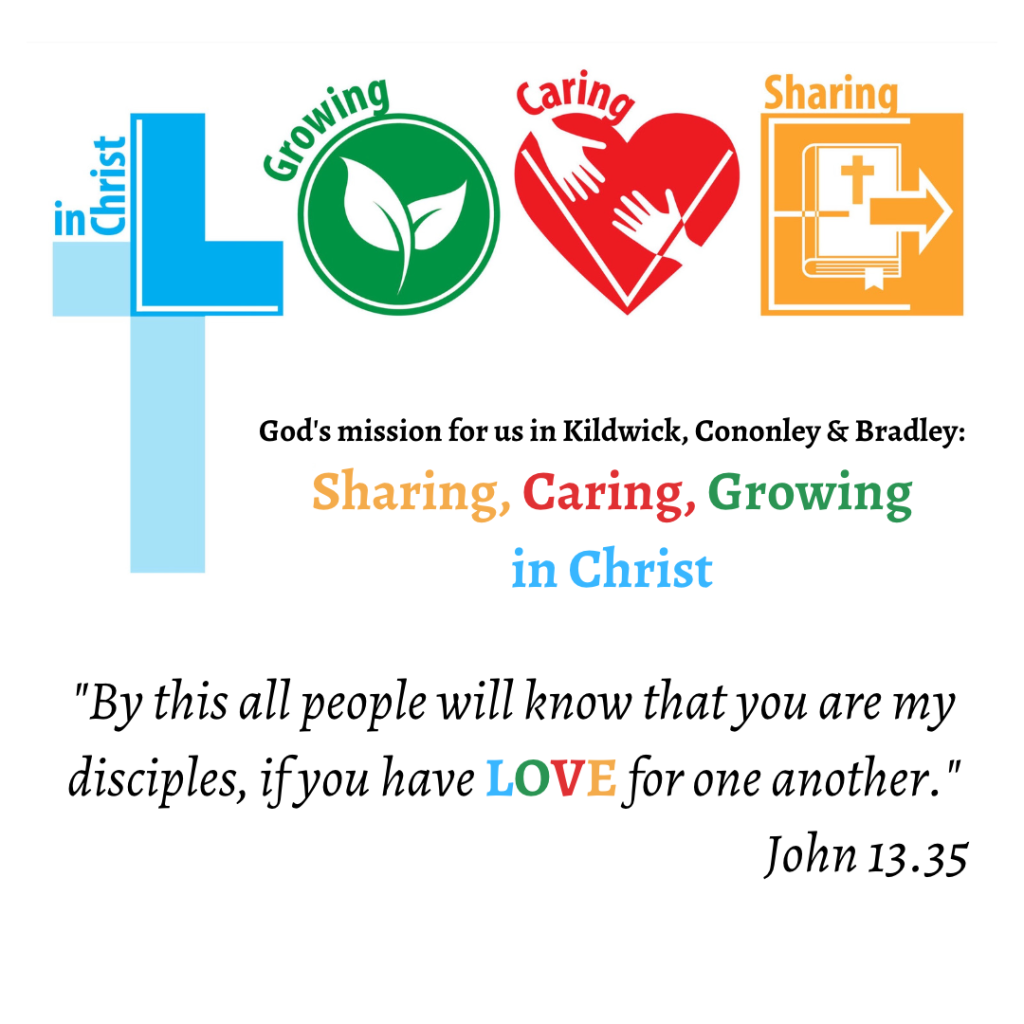
For many years we have expressed our mission in four simple words:

Sharing, Caring, Growing in Christ


In Christ

Everything begins with God's love for us in Jesus Christ. We don't come to church because we have everything sorted out. We come to worship, to pray, to learn and to discover more of what it means to follow Jesus.

Growing

Faith is a journey. None of us has all the answers, and there is always more to discover. Through worship, prayer, the Bible and one another, we seek to grow in faith and in our understanding of God.

Caring

Following Jesus means caring for one another and for the communities around us. We seek to put God's love into practice through friendship, compassion, service and care for our neighbours.

Sharing

The good news of Jesus is something to be shared. We want to share God's hope, love and peace through what we say, but also through how we live and how we serve others.
1373761
This is reflected in our vision for the parish:

Living out our faith, rooted in service; embracing everybody equally.


We want these to be more than words. They describe the kind of Christian community we are seeking to become.

What happens if I come on Sunday?

You don't need to book or let us know that you're coming. Just turn up.

Our services vary across our three churches. Some are traditional celebrations of Holy Communion, while others are more informal. You can find the time and location of this week's services on our Sunday Services page.

When you arrive, there will usually be someone to welcome you and give you anything you need for the service. You are welcome to sit wherever you like.

Don't worry if you aren't familiar with the service or don't know when to stand or sit. Just follow along as much or as little as you feel comfortable with. Nobody will mind if you get something 'wrong'.

See our Sunday services

Do I need to be a Christian?

No.

You might have been a Christian for many years, be returning to church after a long time away, have lots of questions, or simply be curious.

You don't have to have faith sorted out before coming to church. Exploring, questioning and sometimes doubting are all part of the journey.

Whatever your background, faith or spiritual beliefs, you are welcome.

What should I wear?

Whatever you normally wear!

There is no dress code. Some people dress smartly, others come in jeans and trainers. Come in whatever makes you comfortable.

What about children?

Children and families are very welcome at our churches.

We know that children make noise, move around and don't always behave like adults, and that's absolutely fine. Please don't worry about having to keep them perfectly quiet.

We also have activities especially for children and families throughout the year.

Find out about Children & Families

Will I be expected to give money?

No.

There may be an opportunity to give during or after a service, but visitors should never feel under any pressure to contribute. Please simply be our guest.

Can I receive Communion?

If you normally receive Holy Communion in your own church, you are welcome to receive with us.

If you would prefer not to receive Communion, you are still very welcome to come forward for a blessing, or simply remain in your seat. There is no pressure either way.

Accessibility

Accessibility varies between our three historic church buildings. You can find specific access information on each church's page, or please contact us if we can help you plan your visit.

Getting involved

Coming to a Sunday service is only one way to be part of our parish.

Throughout the week there are opportunities to meet people, pray, learn, sing, serve our communities and simply spend time together. Have a look at our What's On pages to see what might interest you.

You can also sign up for our weekly email newsletter to find out what's happening across Kildwick, Cononley & Bradley.

See What's On
Get our Weekly Newsletter

Still have questions?

Please get in touch. It doesn't matter whether your question is about a service, accessibility, children, faith, or simply which of our churches might be right for you.

We would be very happy to help.

Contact Us

A word from Mike
Mike-solo-300x222

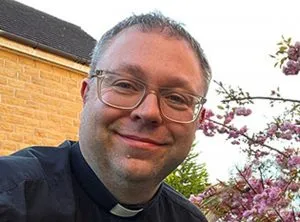
I'm Mike Green, the Vicar of Kildwick, Cononley & Bradley.

Finding your way into a church for the first time can sometimes feel daunting, particularly if you're not sure what to expect. I hope you'll discover that you don't need to know the right words, understand everything we do, or have all the answers before you come.

Whoever you are, and wherever you are on your journey of faith, there is a place for you here.

I hope we'll have the opportunity to welcome you in person soon.

Best wishes,
Revd Mike