Search

Type your text, and hit enter to search:

When St Andrew’s nearly fell down 

Today, the great stone arcades of St Andrew’s appear solid and permanent. Yet at the end of the nineteenth century, parts of the church were in such a dangerous condition that urgent action was needed.

When restoration work began in 1901, the builders made an alarming discovery. Some of the pillars supporting the church had little or no proper foundations beneath them.

The Lang Kirk of Craven had survived for centuries, but parts of it were in danger of failing.

Warning signs

By 1897, serious concern was being expressed about the condition of St Andrew’s. Cracks and movement in the masonry suggested that parts of the building were becoming unstable.

The church had grown through repeated rebuilding and enlargement. Medieval builders had extended it eastwards, added aisles and arcades, and incorporated earlier fabric into the structure. Later repairs had not always addressed the underlying problems.

A major restoration was therefore planned under the Lancaster architects Austin and Paley. The work began in 1901 and continued until 1903.

It soon became clear that this would involve much more than ordinary repairs.

Pillars without proper foundations

The most disturbing discovery concerned several of the arcade pillars towards the eastern part of the church.

These pillars carried the arches separating the nave and chancel from the south aisle. They supported a considerable weight of stonework, yet the restoration account indicates that some had been built with little or no adequate foundation.

Instead, they stood over ground which had previously been used for burials.

As graves beneath the pillars settled or collapsed, the masonry above them had begun to move. This appears to have contributed to the dangerous condition of the arcade.

Four pillars and their arches had to be taken down. New foundations were excavated to a depth of about six feet before the stonework could be rebuilt.

It must have been a dramatic sight. For a time, a substantial part of the interior of St Andrew’s was effectively a building site, with medieval masonry dismantled and the ground beneath the church opened.

Graves beneath the church

The restoration account reports that two complete skeletons were uncovered while the new foundations were being dug.

Their discovery is not surprising in itself. Burial inside medieval churches was common, and St Andrew’s had already been in use for many centuries before the pillars were constructed.

What makes these burials particularly interesting is their relationship to the later building.

If the account is accurate, the graves were already present when parts of the arcade were built above them. This gives us a sequence of activity:

the burials came first, then the pillars and arches, and finally the rebuilding of 1901–03.

Unfortunately, the skeletons do not appear to have been scientifically examined or dated. We cannot assume that they were Anglo-Saxon or Norman. They may have belonged to any of several medieval phases in the history of the church.

Nevertheless, they show that the ground beneath the present building preserves evidence of earlier use.

Rebuilding the medieval church

Restoration work of this kind would be approached very differently today.

Modern archaeologists would carefully record the position and depth of burials, foundations and other features. Any disturbed human remains would be treated according to strict legal and professional procedures. The relationships between graves, walls and floors would be documented because they might reveal how the building developed.

In 1901, the priority was saving the church.

The unstable masonry was dismantled, secure foundations were constructed and the pillars and arches were rebuilt. Much of the medieval stone was reused, helping to preserve the appearance and character of the interior.

The work succeeded. More than a century later, the rebuilt arcade continues to stand.

What else was discovered?

The restoration is famous for another remarkable discovery.

Fragments of several pre-Conquest carved stone monuments were found built into the fabric of the church. Most are now dated to the tenth century and provide some of the earliest evidence for Christianity at Kildwick.

Exactly where every fragment was found is not always clear from the published accounts. Establishing their original locations, and whether any were discovered during the work on the pillars and foundations, is one of the questions behind our current research.

The restoration also exposed evidence which the Vicar, the Revd E. W. Brereton, believed marked the eastern end of a much smaller church. He associated this earlier building with the four westernmost bays of the present nave.

The work of 1901–03 therefore revealed evidence at both ends of St Andrew’s: possible remains of a shorter church in the west, and graves beneath later medieval construction further east.

Could modern archaeology tell us more?

Much of what the restorers saw was covered over again when the work was completed.

We are now examining surviving plans, photographs, correspondence and other records in the hope of discovering more precise information. We particularly want to establish which pillars were rebuilt, where the skeletons were found and whether the builders recorded any earlier walls or foundations.

There may also be an opportunity to investigate beneath the church without disturbing the floor.

We have begun discussing the possibility of a future ground-penetrating radar survey with archaeological prospection specialists at the University of Bradford. Such a survey might help identify former foundations, disturbed ground, burial features or other structures beneath parts of the present building.

A church which has been enlarged, rebuilt and used for burial over many centuries will produce complicated results. Ground-penetrating radar cannot, by itself, tell us the date of a grave or wall. But it may help us understand where earlier features survive and where future research should be concentrated.

A church rescued

The phrase “When St Andrew’s nearly fell down” sounds dramatic, but the danger was real.

Parts of the church were unstable. Several pillars and arches had to be dismantled, and proper foundations constructed beneath them. Without that intervention, the movement of the masonry would probably have continued.

The restoration of 1901–03 undoubtedly changed parts of the building, as major Victorian and Edwardian restorations often did. But it also saved St Andrew’s.

It revealed ancient carved stones, traces of earlier construction and graves beneath the medieval arcades. In solving an immediate structural crisis, the restorers also opened a brief window into the hidden archaeology of the church.

More than a century later, their discoveries are helping us ask new questions about how the Lang Kirk of Craven grew, and what may still survive beneath its floor. 

06/10/2026
HelloWhite
Hello and welcome to our church. If you are a new visitor, we have a page for you to get to know us and learn more about planning a visit.
Click here to see more.

Planning your Visit

A Warm Welcome 

If you're new to church, new to the area, returning after some time away, or simply wondering whether church might be for you, you are very welcome at Kildwick, Cononley & Bradley.

You don't need to know what to do, what to say or even what you believe. Just come as you are. Our churches are places where people can worship, ask questions, find friendship and explore faith together.

We are one parish with three churches: St Andrew's Kildwick, St John's Cononley and The Bradley Church. Each is a little different, but wherever you join us, we hope you will find a warm welcome.

Find our Sunday services

What are we about?

At the heart of our life together is Jesus Christ and his call to love God and love our neighbour.

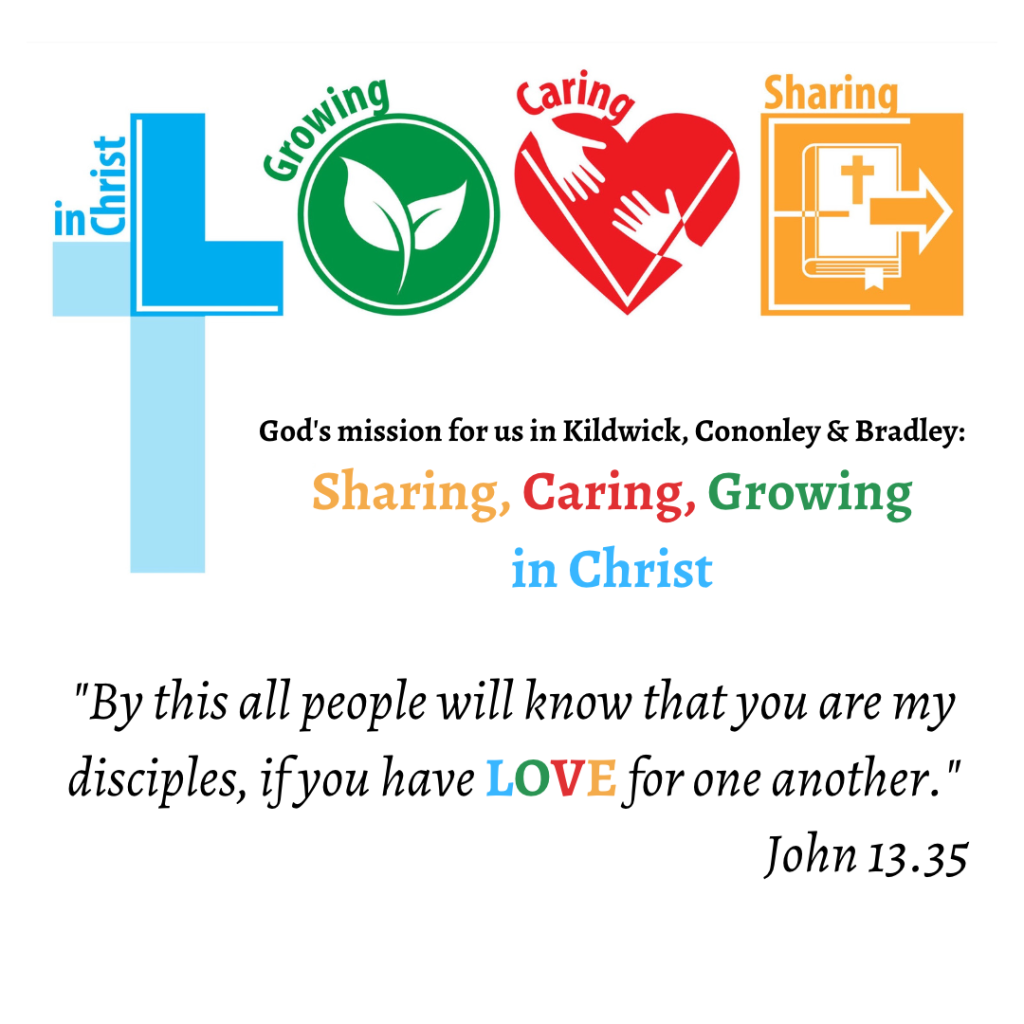
For many years we have expressed our mission in four simple words:

Sharing, Caring, Growing in Christ


In Christ

Everything begins with God's love for us in Jesus Christ. We don't come to church because we have everything sorted out. We come to worship, to pray, to learn and to discover more of what it means to follow Jesus.

Growing

Faith is a journey. None of us has all the answers, and there is always more to discover. Through worship, prayer, the Bible and one another, we seek to grow in faith and in our understanding of God.

Caring

Following Jesus means caring for one another and for the communities around us. We seek to put God's love into practice through friendship, compassion, service and care for our neighbours.

Sharing

The good news of Jesus is something to be shared. We want to share God's hope, love and peace through what we say, but also through how we live and how we serve others.
1373761
This is reflected in our vision for the parish:

Living out our faith, rooted in service; embracing everybody equally.


We want these to be more than words. They describe the kind of Christian community we are seeking to become.

What happens if I come on Sunday?

You don't need to book or let us know that you're coming. Just turn up.

Our services vary across our three churches. Some are traditional celebrations of Holy Communion, while others are more informal. You can find the time and location of this week's services on our Sunday Services page.

When you arrive, there will usually be someone to welcome you and give you anything you need for the service. You are welcome to sit wherever you like.

Don't worry if you aren't familiar with the service or don't know when to stand or sit. Just follow along as much or as little as you feel comfortable with. Nobody will mind if you get something 'wrong'.

See our Sunday services

Do I need to be a Christian?

No.

You might have been a Christian for many years, be returning to church after a long time away, have lots of questions, or simply be curious.

You don't have to have faith sorted out before coming to church. Exploring, questioning and sometimes doubting are all part of the journey.

Whatever your background, faith or spiritual beliefs, you are welcome.

What should I wear?

Whatever you normally wear!

There is no dress code. Some people dress smartly, others come in jeans and trainers. Come in whatever makes you comfortable.

What about children?

Children and families are very welcome at our churches.

We know that children make noise, move around and don't always behave like adults, and that's absolutely fine. Please don't worry about having to keep them perfectly quiet.

We also have activities especially for children and families throughout the year.

Find out about Children & Families

Will I be expected to give money?

No.

There may be an opportunity to give during or after a service, but visitors should never feel under any pressure to contribute. Please simply be our guest.

Can I receive Communion?

If you normally receive Holy Communion in your own church, you are welcome to receive with us.

If you would prefer not to receive Communion, you are still very welcome to come forward for a blessing, or simply remain in your seat. There is no pressure either way.

Accessibility

Accessibility varies between our three historic church buildings. You can find specific access information on each church's page, or please contact us if we can help you plan your visit.

Getting involved

Coming to a Sunday service is only one way to be part of our parish.

Throughout the week there are opportunities to meet people, pray, learn, sing, serve our communities and simply spend time together. Have a look at our What's On pages to see what might interest you.

You can also sign up for our weekly email newsletter to find out what's happening across Kildwick, Cononley & Bradley.

See What's On
Get our Weekly Newsletter

Still have questions?

Please get in touch. It doesn't matter whether your question is about a service, accessibility, children, faith, or simply which of our churches might be right for you.

We would be very happy to help.

Contact Us

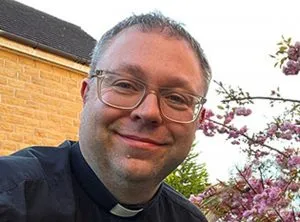
A word from Mike
Mike-solo-300x222

I'm Mike Green, the Vicar of Kildwick, Cononley & Bradley.

Finding your way into a church for the first time can sometimes feel daunting, particularly if you're not sure what to expect. I hope you'll discover that you don't need to know the right words, understand everything we do, or have all the answers before you come.

Whoever you are, and wherever you are on your journey of faith, there is a place for you here.

I hope we'll have the opportunity to welcome you in person soon.

Best wishes,

Revd Mike