Search

Type your text, and hit enter to search:

Why do people say St Andrew’s dates from AD 950? 

For many years, visitors to St Andrew’s have been told that the church dates from around AD 950.

The date appears in guidebooks, displays and descriptions of the church. It gives St Andrew’s an extraordinary history stretching back more than a thousand years.

But what actually happened in AD 950?

The honest answer is that we do not know.

No surviving document records the foundation of St Andrew’s in that year. Nor has an archaeological investigation dated the earliest church building to precisely AD 950.

Instead, the familiar date seems to have developed from something discovered during the restoration of St Andrew’s at the beginning of the twentieth century.

Ancient stones within the church

Between 1901 and 1903, St Andrew’s underwent an extensive restoration.

As later walls and structural features were opened up, several fragments of ancient carved stone were discovered. They had been reused as building material within the medieval church.

The fragments had once formed parts of large stone crosses or other Christian monuments. Their decoration included interlaced patterns, figures and animals.

They were clear evidence that Christian monuments had stood at Kildwick long before much of the present church was built.

Scholars including W. G. Collingwood studied and illustrated the stones. From their form and decoration, he concluded that they belonged to the Anglo-Scandinavian period.

In discussing their date, he suggested that some of the sculpture could not be much earlier than about AD 950.

That was not the date of the foundation of the church. It was an approximate date proposed for pieces of sculpture.

But over time, the distinction became blurred.

“The stones date from around 950” gradually became “there was a church here by 950”, and eventually the much more definite claim that “St Andrew’s was founded in 950”.

What modern scholarship tells us

The Kildwick stones have since been examined by Professor Elizabeth Coatsworth for the Corpus of Anglo-Saxon Stone Sculpture.

Her detailed study confirms that most of the fragments probably date from the tenth century. They represent several different monuments and the work of more than one sculptor.

This is important evidence.

The stones show that a Christian community at or near Kildwick had access to skilled craftspeople and patrons wealthy enough to commission substantial carved monuments.

One fragment, known as Kildwick 1, probably depicts a biblical scene. Dr Aleksandra McClain of the University of York has pointed out that explicitly biblical images were relatively unusual on tenth-century monuments. Whoever commissioned it appears to have been making a deliberate statement.

But the stones still cannot give us an exact foundation date.

They may have stood beside a church, within a churchyard or at another important Christian location nearby. Even if they were originally erected on the present site, they do not tell us precisely when the first church was built.

Was there a church here in the tenth century?

There are good reasons to think that there may have been.

The Corpus of Romanesque Sculpture in Britain and Ireland concludes that the pre-Conquest stones suggest the presence of a church at Kildwick from at least the tenth century.

During the 1901–03 restoration, the Revd E. W. Brereton also believed that evidence for a much smaller, earlier stone church had been exposed within the present building. He thought its eastern limit could be identified around the fourth supports from the west.

Modern scholars have suggested that the four westernmost bays of the present nave may preserve the site of this earlier aisleless church, or perhaps its nave.

What we cannot yet establish is the date of that structure. It might belong to the tenth century, but it could represent the church recorded in Domesday Book or a later Norman rebuilding.

That is one of the questions now being investigated.

What we know for certain

The earliest definite written evidence comes from Domesday Book in 1086, which records one church at Kildwick.

By the first half of the twelfth century, surviving documents refer to the church of St Andrew at Kildwick.

We can therefore say with confidence that:

Christian monuments were being erected at or near Kildwick during the tenth century;
a church certainly existed here by 1086;
it was dedicated to St Andrew by the first half of the twelfth century;
and evidence seen during the 1901 restoration suggests that a smaller stone church may survive within the footprint of the present building.

What we cannot yet say is that St Andrew’s was founded in the year 950.

An approximate date which became a tradition

The familiar date of AD 950 is therefore not entirely wrong, but it needs explaining.

It preserves the important truth that Christianity at Kildwick reaches back into the Anglo-Saxon and Anglo-Scandinavian period. It reminds us that the story of this place began long before the Norman Conquest.

But 950 is an approximate date associated with the sculpture, not a recorded foundation date for the church.

The more accurate claim is also the more interesting one:

St Andrew’s stands on a site associated with a Christian community and carved monuments during the tenth century, although the date and form of its earliest church remain unknown.

We are now examining records from the 1901–03 restoration and exploring whether a non-invasive archaeological survey might help identify the footprint of the earlier building.

Perhaps one day we will be able to say more confidently when the first church was built.

For now, AD 950 should be understood not as a precise birthday, but as a signpost towards the remarkable pre-Conquest Christian history of Kildwick. 

29/09/2026
HelloWhite
Hello and welcome to our church. If you are a new visitor, we have a page for you to get to know us and learn more about planning a visit.
Click here to see more.

Planning your Visit

A Warm Welcome 

If you're new to church, new to the area, returning after some time away, or simply wondering whether church might be for you, you are very welcome at Kildwick, Cononley & Bradley.

You don't need to know what to do, what to say or even what you believe. Just come as you are. Our churches are places where people can worship, ask questions, find friendship and explore faith together.

We are one parish with three churches: St Andrew's Kildwick, St John's Cononley and The Bradley Church. Each is a little different, but wherever you join us, we hope you will find a warm welcome.

Find our Sunday services

What are we about?

At the heart of our life together is Jesus Christ and his call to love God and love our neighbour.

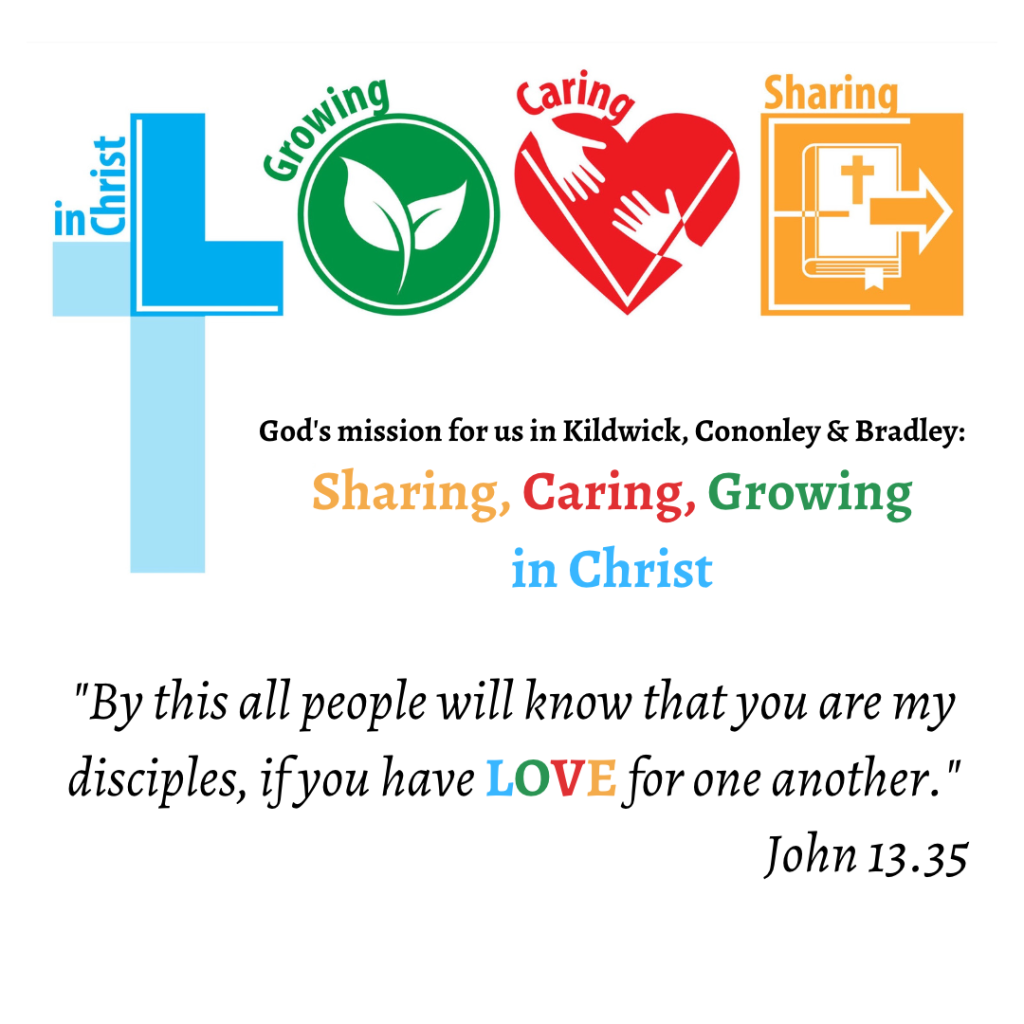
For many years we have expressed our mission in four simple words:

Sharing, Caring, Growing in Christ


In Christ

Everything begins with God's love for us in Jesus Christ. We don't come to church because we have everything sorted out. We come to worship, to pray, to learn and to discover more of what it means to follow Jesus.

Growing

Faith is a journey. None of us has all the answers, and there is always more to discover. Through worship, prayer, the Bible and one another, we seek to grow in faith and in our understanding of God.

Caring

Following Jesus means caring for one another and for the communities around us. We seek to put God's love into practice through friendship, compassion, service and care for our neighbours.

Sharing

The good news of Jesus is something to be shared. We want to share God's hope, love and peace through what we say, but also through how we live and how we serve others.
1373761
This is reflected in our vision for the parish:

Living out our faith, rooted in service; embracing everybody equally.


We want these to be more than words. They describe the kind of Christian community we are seeking to become.

What happens if I come on Sunday?

You don't need to book or let us know that you're coming. Just turn up.

Our services vary across our three churches. Some are traditional celebrations of Holy Communion, while others are more informal. You can find the time and location of this week's services on our Sunday Services page.

When you arrive, there will usually be someone to welcome you and give you anything you need for the service. You are welcome to sit wherever you like.

Don't worry if you aren't familiar with the service or don't know when to stand or sit. Just follow along as much or as little as you feel comfortable with. Nobody will mind if you get something 'wrong'.

See our Sunday services

Do I need to be a Christian?

No.

You might have been a Christian for many years, be returning to church after a long time away, have lots of questions, or simply be curious.

You don't have to have faith sorted out before coming to church. Exploring, questioning and sometimes doubting are all part of the journey.

Whatever your background, faith or spiritual beliefs, you are welcome.

What should I wear?

Whatever you normally wear!

There is no dress code. Some people dress smartly, others come in jeans and trainers. Come in whatever makes you comfortable.

What about children?

Children and families are very welcome at our churches.

We know that children make noise, move around and don't always behave like adults, and that's absolutely fine. Please don't worry about having to keep them perfectly quiet.

We also have activities especially for children and families throughout the year.

Find out about Children & Families

Will I be expected to give money?

No.

There may be an opportunity to give during or after a service, but visitors should never feel under any pressure to contribute. Please simply be our guest.

Can I receive Communion?

If you normally receive Holy Communion in your own church, you are welcome to receive with us.

If you would prefer not to receive Communion, you are still very welcome to come forward for a blessing, or simply remain in your seat. There is no pressure either way.

Accessibility

Accessibility varies between our three historic church buildings. You can find specific access information on each church's page, or please contact us if we can help you plan your visit.

Getting involved

Coming to a Sunday service is only one way to be part of our parish.

Throughout the week there are opportunities to meet people, pray, learn, sing, serve our communities and simply spend time together. Have a look at our What's On pages to see what might interest you.

You can also sign up for our weekly email newsletter to find out what's happening across Kildwick, Cononley & Bradley.

See What's On
Get our Weekly Newsletter

Still have questions?

Please get in touch. It doesn't matter whether your question is about a service, accessibility, children, faith, or simply which of our churches might be right for you.

We would be very happy to help.

Contact Us

A word from Mike
Mike-solo-300x222

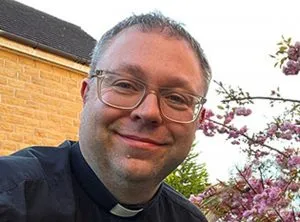
I'm Mike Green, the Vicar of Kildwick, Cononley & Bradley.

Finding your way into a church for the first time can sometimes feel daunting, particularly if you're not sure what to expect. I hope you'll discover that you don't need to know the right words, understand everything we do, or have all the answers before you come.

Whoever you are, and wherever you are on your journey of faith, there is a place for you here.

I hope we'll have the opportunity to welcome you in person soon.

Best wishes,

Revd Mike